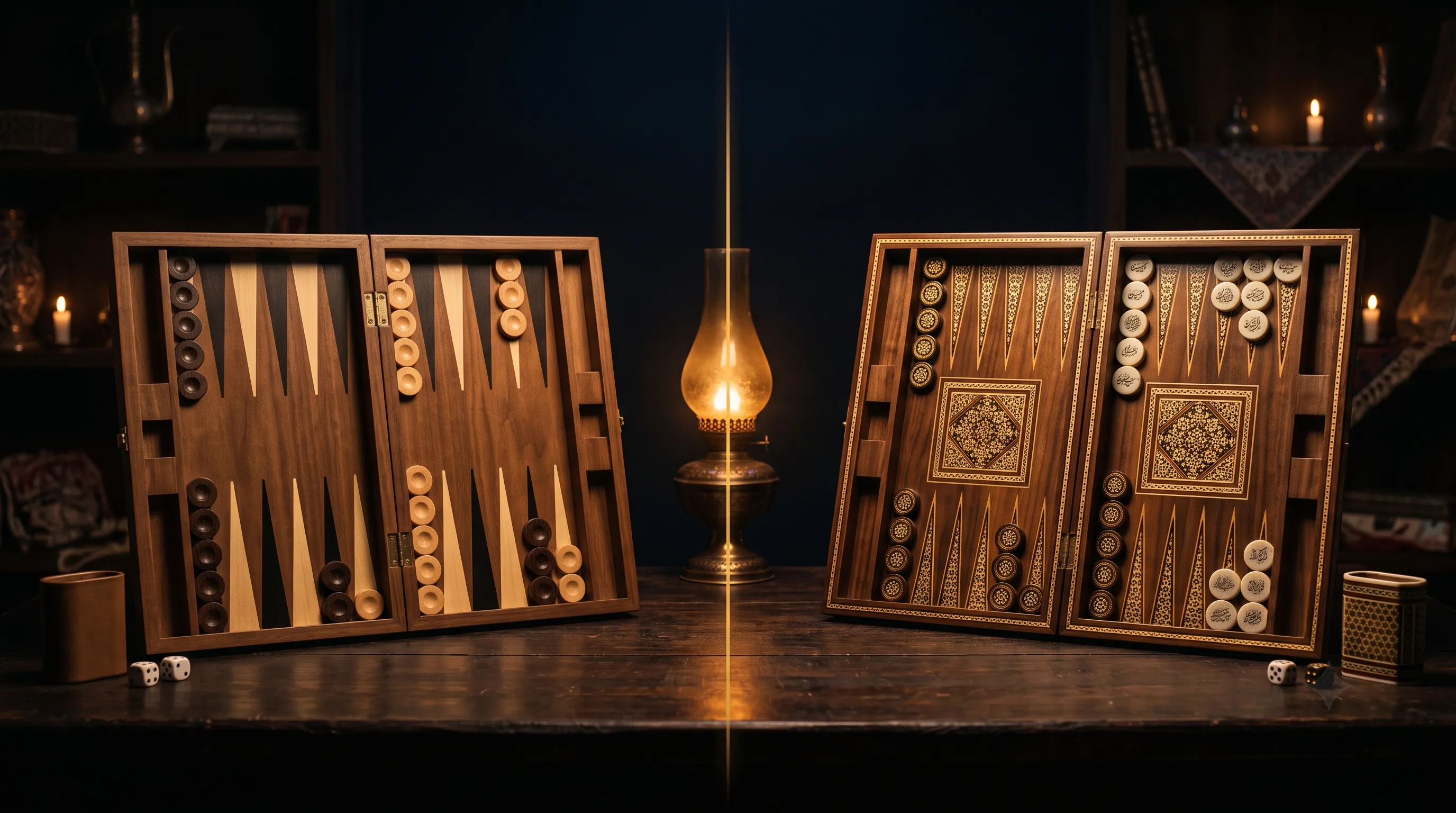
Backgammon is in Iran's blood. From the old coffeehouses of Tehran to the modern cafés of the north, the sound of checkers and dice has always been music to Iranian ears. This game is more than just a pastime — it's part of Iran's cultural identity, a story woven into the fabric of Persian civilization, stretching from ancient history to today's digital world. Backgammon connects Iranians across the globe.
From Ancient History to Your Screen
Backgammon is one of the oldest games in the world, and its roots in ancient Iran go back thousands of years. Archaeological excavations in Shahr-e Sukhteh (Burnt City) in Sistan uncovered a 5,200-year-old backgammon set — the oldest ever discovered. This finding shows that ancient Iranians not only loved this game but also artistically crafted it from wood and ivory. This ancient board is now preserved in Iran's National Museum.
In Iranian culture, backgammon is more than just a game. From Ferdowsi's Shahnameh to coffeehouse tales, it has always been part of daily life. Poets have written about it, and mystics have used it as a symbol of fate. Even at Nowruz celebrations, backgammon boards sometimes appear among the Haft-Seen spread.
Coffeehouses — The Birthplace of Iranian Backgammon Culture
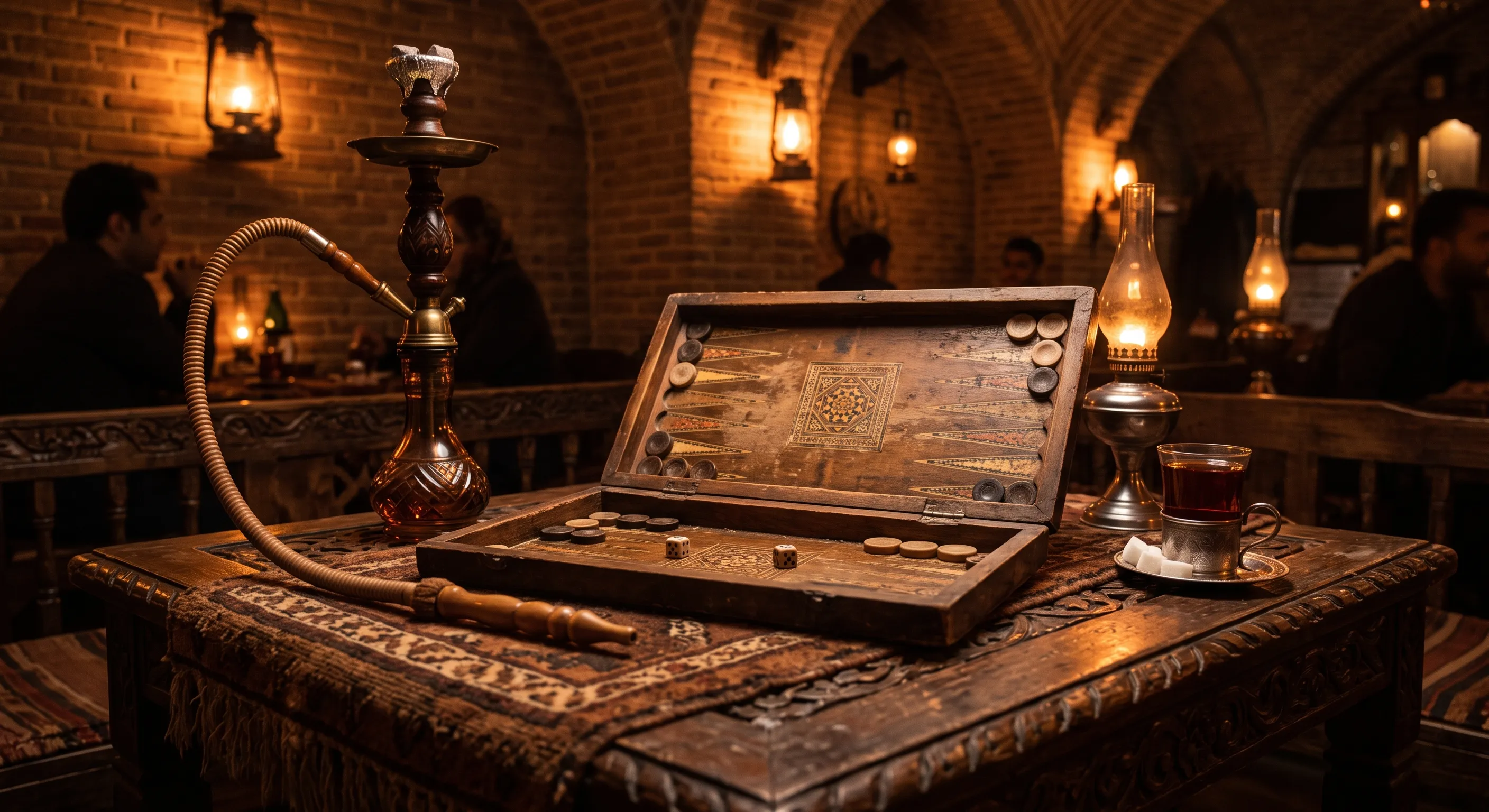
Traditional Iranian coffeehouses have always echoed with the sound of backgammon checkers. In the past, backgammon was not just entertainment — it was a social ritual. Players would gather, drink tea, and spend hours around the board. These spaces were hubs of conversation, friendship, and healthy competition. Many fond Iranian memories were made around these boards.
Backgammon in Persian Literature & Art
Backgammon holds a special place in Persian literature. Ferdowsi's Shahnameh tells the famous story of backgammon being introduced to Iran by the wise minister Bozorgmehr. Hafez, Rumi, and other poets also make frequent references to the game. Saadi mentioned backgammon in his Golestan as well.
- Ferdowsi's Shahnameh: The story of backgammon and Bozorgmehr
- Hafez: Comparing fate to backgammon dice
- Coffeehouse paintings: Classic scenes of backgammon players
Backgammon in Folk Culture
Backgammon has also permeated Persian proverbs and everyday idioms. "Roll your own dice" means taking responsibility for your life. "Your checker got hit" means losing in a competition. These expressions show how deeply backgammon is rooted in the Iranian cultural subconscious.
In many Iranian families, backgammon is a game of generations. Grandfathers teach their grandchildren, and knowledge passes from one generation to the next. On long winter nights, gathering around the backgammon board is a cherished tradition still alive in many homes today.
Modern Revival Through Online Platforms
Today, backgammon has moved from coffeehouses to mobile screens. AsNard combines this ancient tradition with modern technology, so every Iranian anywhere in the world can sit down at a backgammon board — the same old feeling, with new features. These platforms have attracted a new generation of players to the game.
With the expansion of the internet and mobile apps, online backgammon has eliminated geographical boundaries. An Iranian abroad can now play with an old friend in Tehran. This digital connection keeps the culture of backgammon alive and passes it to the next generation. Statistics show that online backgammon players in Iran have grown by 40% annually.
From Wooden Boards to Touchscreens
Iranian backgammon has traveled from wood and ivory to today's pixels, but its soul remains the same. This game is a symbol of the bond between past and future — a reminder that some things never grow old. AsNard is proud to introduce this heritage to a new generation and keep it alive. As long as dice are rolled, backgammon lives in Iran.