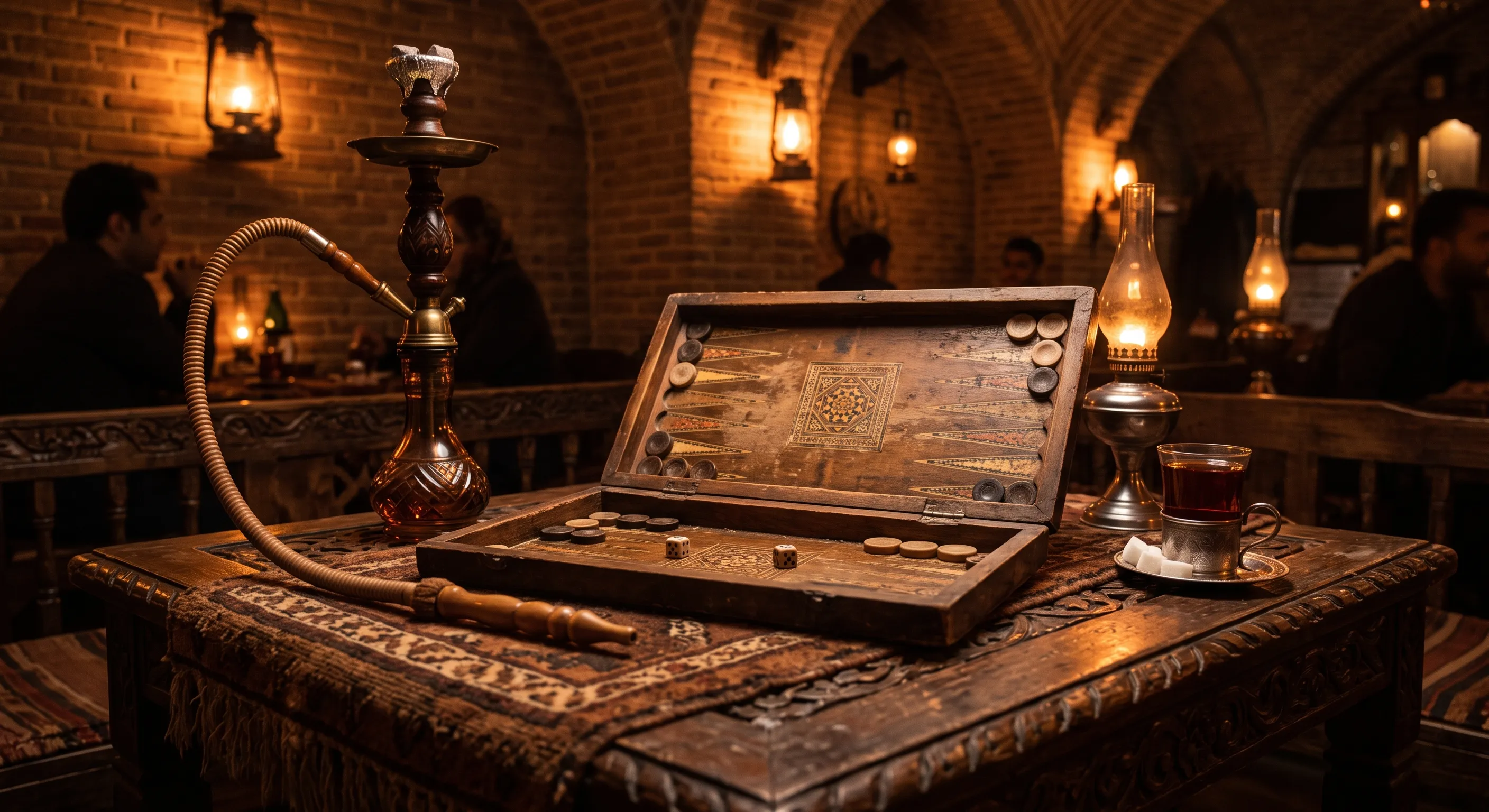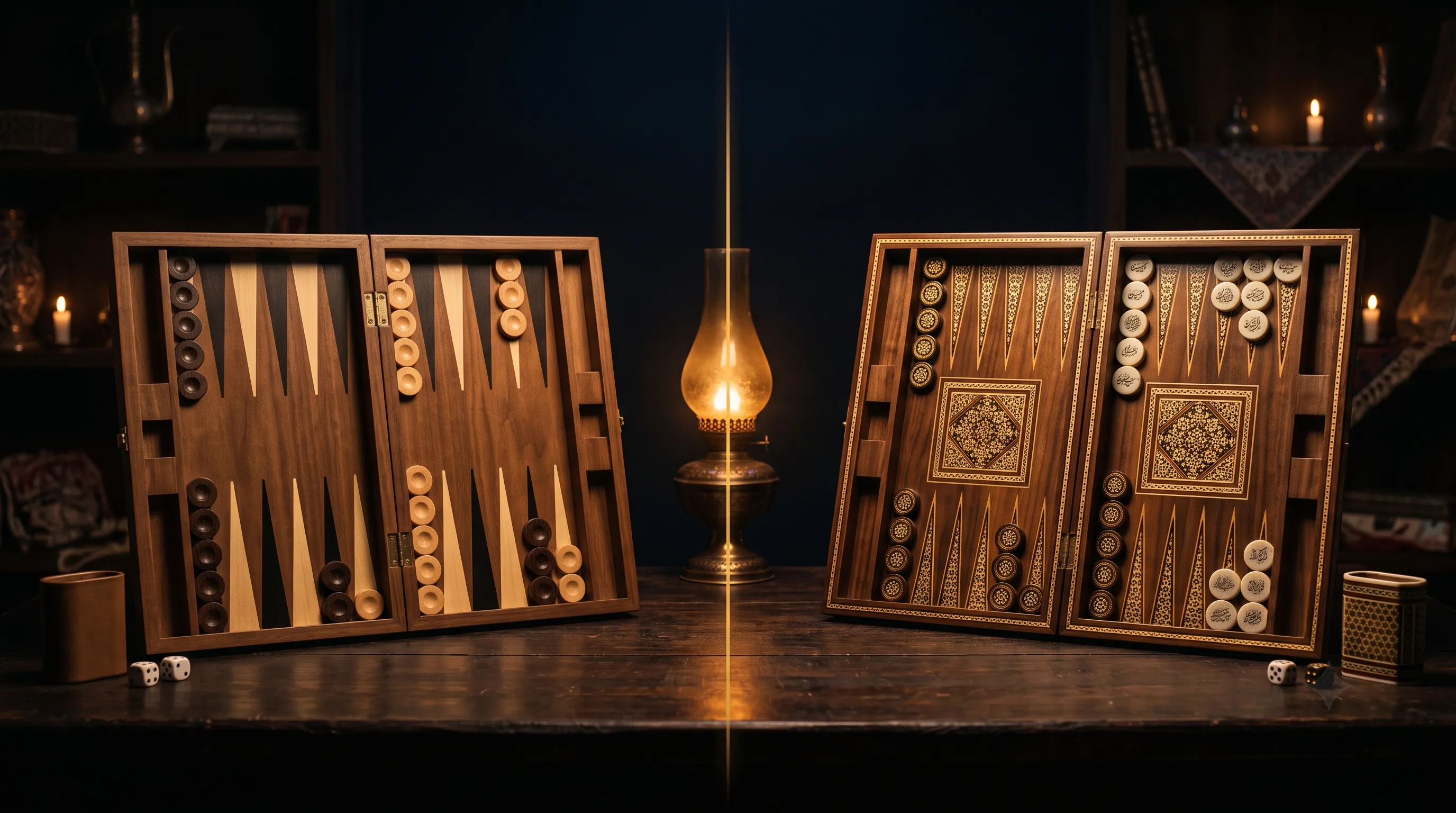
If you've spent any time in online backgammon forums or traditional coffeehouses, you've heard the great debate: Iranian vs. Classic backgammon. Each side claims their style is more authentic, deeper, or simply more fun. But what are the actual differences? In this deep dive, we break down both styles so you can decide which one truly suits you.
One Board, Two Worlds
At first glance, Iranian and Classic backgammon look like twin brothers — both have 15 checkers, 24 points, and two dice. But once you start moving pieces, you realize each has a fundamentally different philosophy behind it.
Classic backgammon is governed by the World Backgammon Federation (WBF) and traces its roots to Europe and America. Iranian backgammon was born in the coffeehouses of Tehran and Isfahan, where every local master added their own unwritten rules over decades of play.
The differences go far beyond the hitting-at-home rule. Classic gives you more freedom and a faster rhythm. Iranian adds caution, making the game deeper and more cerebral. Picking between them is like choosing between fencing and boxing.
What's fascinating is that many Iranian players don't realize they're playing the "Iranian version." On AsNard, you can try both and feel the difference firsthand.
The Hitting-at-Home Difference
The most precise description: "A hit inside your home board locks the hitting checker for the rest of the turn."
When you hit an opponent inside your final six points, the checker that made the hit has these restrictions:
- Cannot land on your own checkers — only an empty point or an opponent's blot
- Cannot bear off during that same turn
- The lock follows the checker if it moves
- The lock clears when your next turn begins
In Classic there is no lock. After a hit you have full freedom — stack on your own checkers or bear off that same turn.
Classic lets you play more aggressively; Iranian forces you to hit more wisely. This small-sounding difference completely changes the style of play.
Some regions in Iran have an even stricter variant called "Lang" — the locked checker cannot move at all unless specific dice are rolled. AsNard implements the more common version.
Interesting note: in standard play, a single home-board hit can serve as both attack and defense. In Iranian, you must choose between the two. This means the Iranian player needs to think further ahead.
Different Strategies for Each Style
In Classic, attacking in the opponent's home board is one of the most powerful weapons. In Iranian, that same hit might lock your own checker — so you must think twice.
Conversely, defensive play is more interesting in Iranian. Knowing your opponent will be restricted, you can leave more tempting blots. The opponent either skips the hit or plays with a disadvantage.
The bear-off phase also differs dramatically. In Classic, after a hit you can recover the same turn. In Iranian, a well-timed hit can waste your entire turn. That's why bear-off in Iranian is more conservative.
These differences mean that switching between the two styles takes time even for expert players. Those who practice both develop greater tactical flexibility.
Another subtle difference: how players manage blots in the mid-board. In Iranian, players leave fewer blots near the opponent's home board because they know they'll be locked after a hit.
Which One Fits You?
Choosing depends on your play style and goals:
- Classic — for international tournaments, playing foreigners, or fast free-flowing games
- Iranian — for playing with Iranian friends, deeper tactical challenges, or nostalgic coffeehouse feel
On AsNard you don't have to choose permanently. Play Classic one day and Iranian the next — each exercises different mental muscles. Many top AsNard players practice both modes.