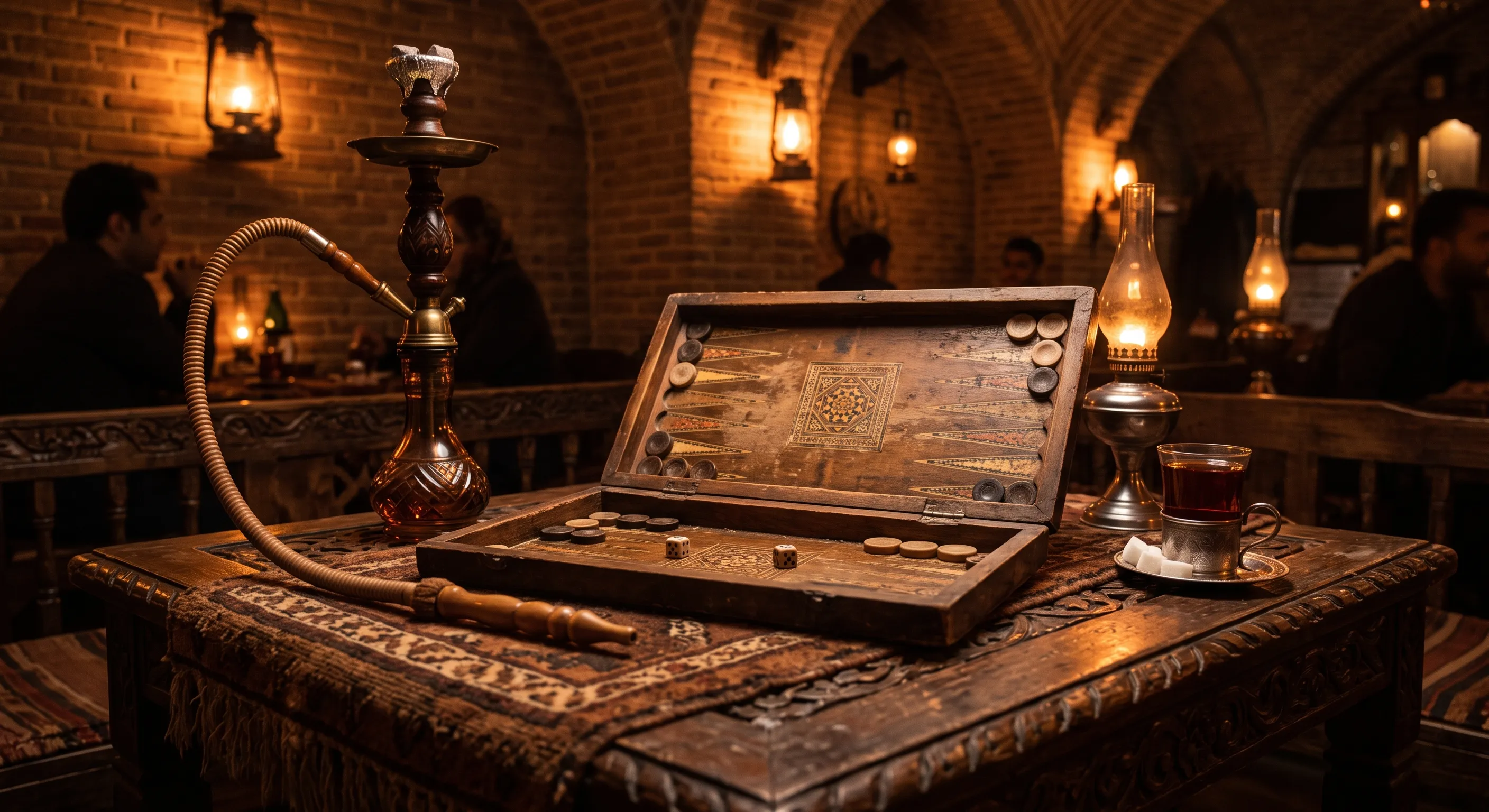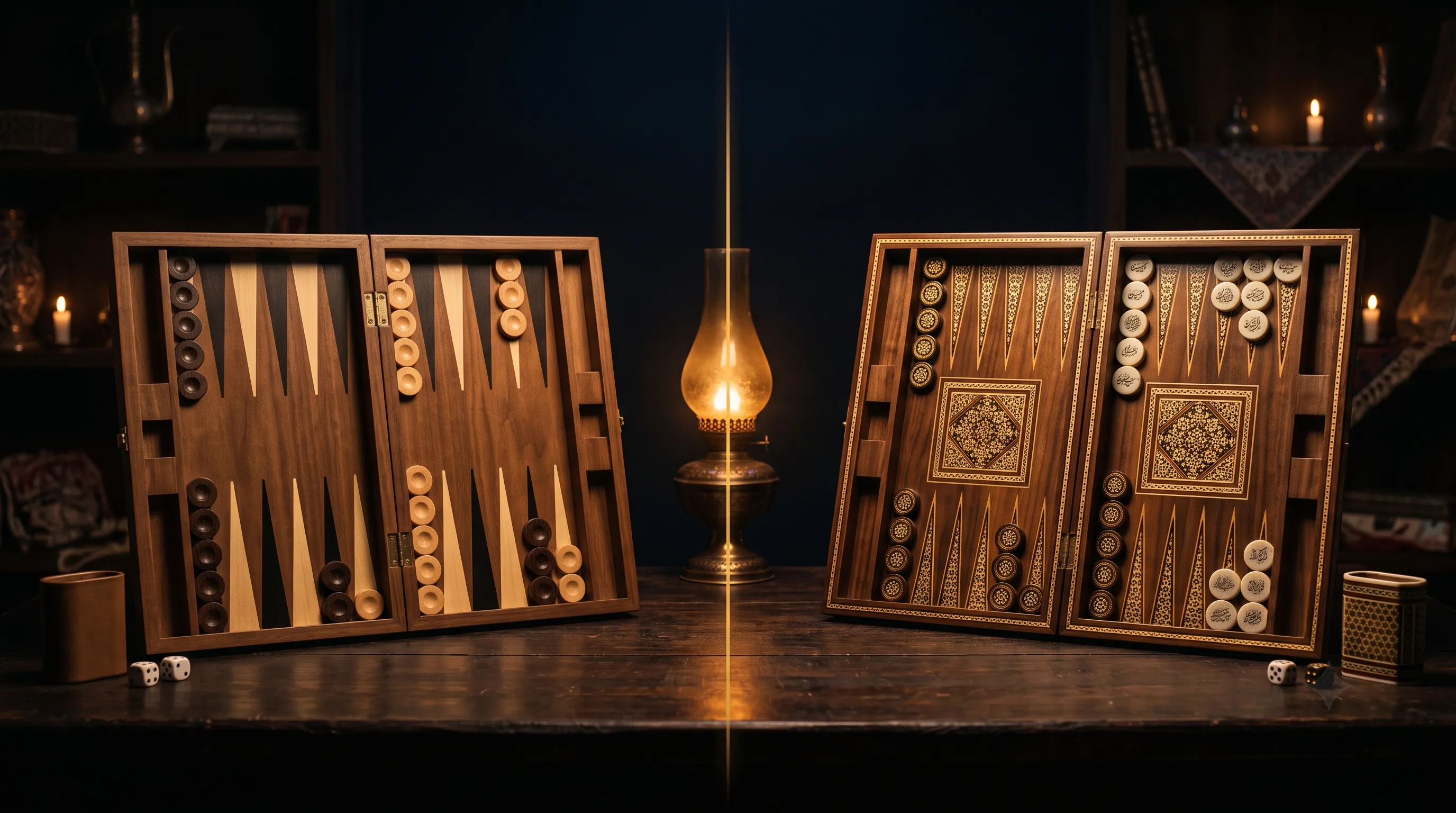
The sound of dice striking a wooden board, the movement of checkers through narrow points, and a decision that can change the outcome in an instant—this is familiar to millions worldwide. Backgammon is more than just a two-player pastime; it's part of the social fabric of Iran, the Middle East, the Caucasus, Central Asia, and Europe.
Despite the game's simple appearance, its history is long and complex. The roots stretch back thousands of years, but not every ancient game with dice and pieces can be called backgammon. What we know today as backgammon is the result of gradual transformation within a large family of race games that took different forms across civilizations.
Is Backgammon the Oldest Game in the World?
It's often said that backgammon is the oldest game in human history, but this needs clarification. Archaeologists have discovered boards, pieces, and dice thousands of years old in Iran, Mesopotamia, and Egypt. Some belong to games where pieces moved based on dice rolls, similar to backgammon. However, the exact rules of most are unknown, so it's more accurate to say that backgammon is one of the most well-known members of a very ancient family of dice-based race games.
Ancient Games Before Backgammon
The Royal Game of Ur
One of the most famous ancient games, the Royal Game of Ur, was discovered in the Royal Cemetery of Ur in Mesopotamia, dating to around 2600–2400 BCE. It was a two-player race game where players used dice-like tools to move pieces and tried to get them off the board before their opponent. The British Museum describes it as one of the oldest reconstructable games in the world.
Ancient Boards and Pieces in Iran
At ancient sites across Iran—including Shahr-e Sukhteh, Jiroft, Susa, and Tall-e Bakun—various game tools have been discovered. Some boards found at Jiroft feature rows with structural similarities to later nard boards. These findings show that the Iranian plateau was one of the oldest and most important centers of board game culture.
Nard in Ancient Iran
The game known in Persian sources as nard is much closer to modern backgammon than the ancient games. Its name appears in Middle Persian as "Nevardeshir" or "Nardeshir," later shortened to "nard."
The Story of Bozorgmehr and the King of India
The most famous Persian story about the origin of nard begins with chess arriving at the court of Khosrow Anushirvan. The King of India sent chess without explaining its rules, challenging Persian scholars to decipher them. Bozorgmehr, the wise vizier, discovered chess rules and defeated the Indian envoy. In response, he designed the game of nard and sent it to India. This story appears in Pahlavi texts and later in Ferdowsi's Shahnameh. While culturally significant, scholars caution against treating it as definitive historical evidence.
In Iranian culture, the backgammon board was more than a game surface. Its components were seen as symbols of the cosmos:
- Two colors of pieces represent day and night
- 30 pieces correspond to 30 days of the month
- 24 points symbolize 24 hours of the day
- Four board sections represent the four seasons
- 12 points on each side correspond to 12 months or zodiac signs
- The sum of opposite dice faces is always seven, linked to the seven known planets
Backgammon in the Islamic Period
After the fall of the Sassanid Empire, nard did not disappear. It continued in Iran, Iraq, the Levant, and beyond. Persian and Arabic sources frequently mention nard alongside chess. Many boards became exquisite works of art, crafted from wood, ivory, metal, bone, and tile.
The Spread to Rome and Europe
The Roman game Ludus Duodecim Scriptorum (Game of Twelve Lines) and later Tabula—a Byzantine game with 24 points and 15 pieces per player—were key milestones. In medieval Europe, similar games were known collectively as Tables games, including Trictrac in France and Irish in England.
The English word Backgammon first appeared in a 1635 text. The name may combine "back" and an old word for "game," referring to the return of hit pieces to the board.
Differences Between Persian Nard and Western Backgammon
In Iran, two well-known forms exist:
- Nard-e Kutah (Short Nard): Close to international Backgammon in initial setup and movement. Single pieces can be hit and must re-enter.
- Nard-e Boland (Long Nard): Different setup and movement rules. Hitting is not possible—the focus is on building, blocking, and orderly passage.
One of the most important innovations in modern backgammon is the doubling cube, introduced in the mid-1920s. Its faces show 2, 4, 8, 16, 32, and 64. A player who feels they have an advantage can propose doubling the stakes. This added a strategic layer of risk assessment to the game.
Computer Impact on Backgammon
Computers transformed how players understand the game. Powerful analysis software showed that some traditional beliefs of even professional players were incorrect, helping players better understand concepts like pip counting, building primes, and doubling timing.
Online Backgammon
The internet and smartphones have taken backgammon into a new era. Players can now compete with opponents worldwide at any time. Digital platforms have also helped local versions reach broader audiences beyond their geographic origins.
Why Has Backgammon Survived for Thousands of Years?
- Simple rules, deep strategy: Easy to learn but takes years to master
- Skill and luck combined: Dice keep every game unpredictable
- Perfect pace: Short enough for multiple games in a session
- Social nature: Played alongside conversation and friendly competition
- Technology-friendly: Turn-based, two-player structure adapts perfectly to digital platforms
Myth and History: Where Was Backgammon Really Invented?
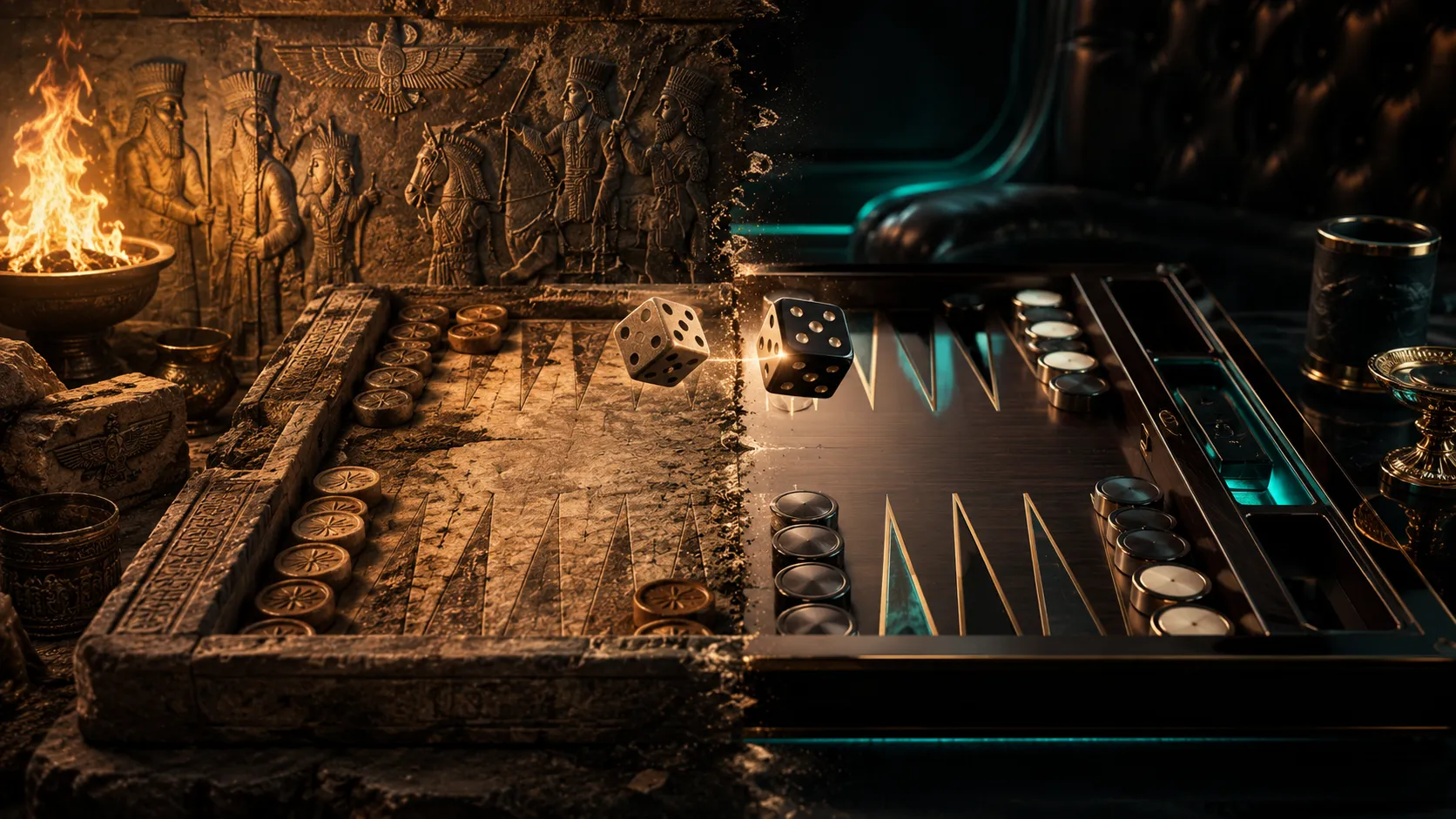
There is no simple answer. Archaeological evidence shows dice and race games existed in multiple ancient civilizations, including Iran and Mesopotamia. Nard found its name and cultural identity in Sassanid Iran. The best view is not a single moment of invention but a long path: Ancient race games → formation of the nard family → Sassanid Persian nard → spread through the Islamic world and Europe → modern Backgammon → competition and online play.
Summary
Backgammon is the product of a long historical journey—from the boards and dice of ancient civilizations, through Sassanid Iran where it gained cultural identity as nard, across the Islamic world and Rome to different regions, ultimately taking shape as modern Backgammon in Europe and America.
The game has changed many times, but its core has remained constant: two players, a set of pieces, an unpredictable dice roll, and decisions that must be made in response. Perhaps that is the secret of backgammon's endurance—it offers a miniature picture of life itself.